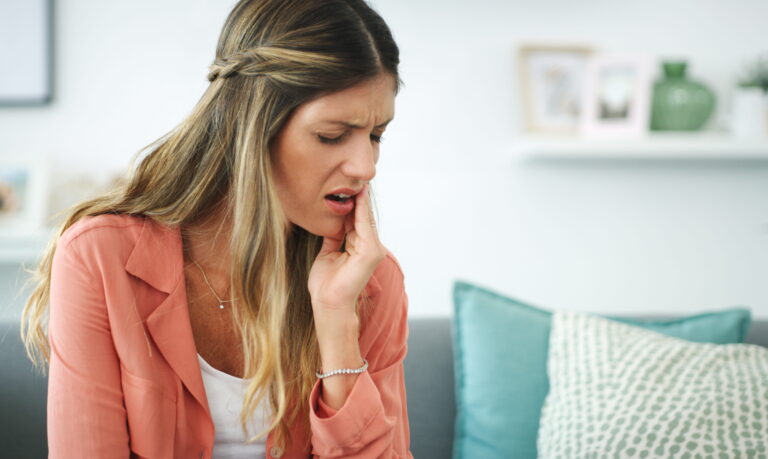
Woke Up With a Toothache Before an Important Day? What to Do Before You See a Dentist
Woke Up With a Toothache Before an Important Day? What to Do Before You See a Dentist
5 min
To run your first relief plan
Salt water
Simplest overnight soother
Swelling + fever
Signs it is urgent
Key takeaways
Start with a warm salt water rinse, a cold compress, and head elevation, then take pain relief as the label directs.
Pain often feels worse at night because lying down sends more blood flow to your head.
Fever, facial swelling, or trouble breathing or swallowing means you need urgent care now, not later.
Home remedies buy you a few calm hours, but only a dentist can treat the real source.
Same-day care is available in Union City, CA, so call as soon as the office opens.
It always happens the night before something that matters. The interview. The wedding. The presentation you rehearsed twenty times. You drift off fine, and then a dull ache taps you awake and slowly turns up the volume. By sunrise, half your face is staging a protest. Take a breath. You can get through this, and this guide walks you through every move, from the first groggy minute to the moment you sit in the chair.
Quick Answer: What to Do First When You Wake Up With a Toothache
The moment you wake up hurting, your job is to lower the pain and protect the tooth until a dentist can look at it. A few calm steps do most of the heavy lifting, and none of them require a pharmacy run at dawn.
The 5-minute action plan
1
Rinse with warm salt water
Stir half a teaspoon of salt into a glass of warm water and swish gently. It loosens trapped debris and soothes irritated gums.
2
Cool the outside of your cheek
Hold a cold compress against your face for about fifteen minutes. It quiets throbbing and eases any puffiness.
3
Prop your head up
Add a pillow so your head sits above your heart. Less pressure in the area usually means less pounding.
4
Take pain relief as directed
Use an over-the-counter pain reliever exactly as the label instructs, if you have no reason to avoid it.
5
Call a dentist
Even if the ache fades, book an appointment. The relief is a pause, not a cure.
What NOT to do (common mistakes that make it worse)
Use These
Warm salt water rinses
A cold compress on the outside of the cheek
Gentle flossing to remove trapped food
Pain relievers taken as the label directs
Avoid These
Placing an aspirin tablet directly on the gum, which can burn the tissue
Chewing on the painful side
Very hot, icy, sugary, or sticky foods
Poking at the tooth with a toothpick or sharp object
Ignoring it and hoping it clears by morning
Why Toothaches Often Strike at the Worst Possible Time
Toothaches feel personal, as if they wait for your calendar to fill up. There is no grudge involved, but there are real reasons the timing feels so cruel.
Why pain feels worse when you’re lying down
Pain tends to spike at night because lying flat sends more blood flow toward your head, which raises pressure around an already angry tooth. During the day, you are busy and distracted, so you notice it less. At 2 a.m., in the quiet dark, there is nothing to compete with the throb, and it feels enormous.
Common causes: cavities, cracked teeth, abscess, and gum issues
Most sudden toothaches trace back to a handful of culprits. A cavity may have crept close to the nerve. A hairline crack can shift under pressure. An infection, called an abscess, may be building below the surface. Inflamed or receding gums can expose sensitive roots. Each one has a different fix, which is exactly why a quick look from a dentist beats guessing.
Why ‘it was fine yesterday’ is so common
Teeth are quiet complainers. A problem can simmer for weeks without a peep, then cross a threshold and announce itself all at once. So when you think it was perfectly fine yesterday, the trouble was likely there already, just below the volume you could feel. The ache is less a sudden event and more a slow story finally reaching its loud chapter.
Safe Pain Relief You Can Use Before Your Appointment
Several at-home steps can genuinely take the edge off while you wait to be seen. Use them thoughtfully, and never exceed any label directions.
Over-the-counter pain relievers: what the evidence says
For many adults, non-prescription pain relievers are the most reliable way to calm dental pain. Reviews of the research, including an American Dental Association pain management guideline, point to anti-inflammatory options as a sensible first choice for short-term relief. Always follow the dosing on the package, and check with a pharmacist or physician first if you take other medications, are pregnant, or have stomach, liver, kidney, or heart concerns.
Cold compress and head elevation
A cold compress on the outside of your cheek slows blood flow to the area, which eases swelling and dulls the throb. Pair it with a propped-up head at rest, and you give yourself two simple, drug-free tools that work together.
Saltwater rinse and gentle flossing
A warm salt water rinse is the gentle workhorse of toothache relief. If a crumb of food is wedged against the sore tooth, a careful pass with floss can lift it out and bring surprising relief. Keep it gentle. This is a rescue, not a scrubbing session.
Topical gels like benzocaine: do they help?
Numbing gels that contain benzocaine can briefly dull a sore spot, and a study on benzocaine gels for acute toothaches found modest short-term relief. The effect is temporary and surface level. Follow the label, keep it off children without guidance, and treat it as a stopgap rather than a solution.
Home remedies to approach with caution
You will find endless folk fixes online. Some soothe, many do nothing, and a few cause harm. Do not place an aspirin tablet against the gum, since it can chemically burn the tissue. Skip heating pads on the face, which can worsen swelling. If a remedy stings, irritates, or feels wrong, stop and stick to the safe basics above.
How to Get Through an Important Day With a Toothache
Yes, you can still show up and shine. The trick is planning your relief and your choices around the hours that matter most.
Timing your pain relief around your event
Think in terms of your schedule. If your big moment is at noon, take your approved pain reliever on a sensible timeline so it is working when you need it, without crowding the label limits. Keep a small relief kit with you: a travel toothbrush, a bottle of water, and your medication. Confidence loves a backup plan.
Foods and drinks to avoid before and during the day
Protect the tooth by steering around triggers. Skip anything very hot, icy cold, sugary, or crunchy, since each can set off a fresh wave of pain at the worst moment. Lean toward lukewarm, soft options, and chew on the opposite side. Sip water rather than sweet or fizzy drinks.
Protecting the tooth temporarily
If a piece of tooth has chipped or a filling has fallen out, a pharmacy temporary dental cement can shield the area for a short while. Keep the spot clean with gentle rinses and avoid pressing on it. These are bandages, not repairs, so do not let a quiet afternoon convince you to cancel the appointment.
When a Toothache Is a Dental Emergency
Most toothaches are urgent but not dangerous. A few are genuine emergencies, and knowing the difference protects more than your schedule.
Warning signs you should not ignore
Swelling in your face, jaw, or neck
Fever along with the tooth pain
A bad taste or discharge near the sore tooth
Pain so severe that relievers do nothing
Trouble opening your mouth, swallowing, or breathing
When to go to the emergency room instead of a dentist
Head to an emergency room or call for emergency help right away if you have trouble breathing or swallowing, swelling that is spreading quickly, or a high fever. These can signal an infection moving beyond the tooth. The ADA notes that hospital visits for dental pain are common, yet many problems still need a dentist to finish the job, as described in the ADA on emergency department referrals. An emergency room can stabilize you and treat infection, but it usually cannot repair the tooth itself.
Signs of a dental abscess or spreading infection
An abscess is a pocket of infection, and it does not fix itself. Watch for a throbbing that will not quit, a pimple-like bump on the gum, a foul taste, tender glands, or facial swelling. If you see these, treat it as urgent and get seen as soon as possible.
What to Expect When You See the Dentist
Walking in with a plan makes the visit feel shorter and calmer. Here is the usual arc of the appointment.
How the dentist diagnoses the source of pain
Your dentist will ask when the pain started, what makes it better or worse, and how it feels. A gentle exam, a tap test, and an X-ray usually reveal whether the trouble is a cavity, a crack, an infection, or the gums. Good detective work up front means the right fix the first time.
Common treatments for toothaches
Cause
Typical approach
Cavity
Clean out decay and place a filling
Deep infection in the nerve
Root canal to clear the infection and save the tooth
Cracked tooth
Bonding, a crown, or further care depending on the depth
Gum irritation
Cleaning and targeted gum care
Abscess
Drainage, infection control, and follow-up treatment
Questions to ask your dentist
What exactly is causing my pain?
What happens if I wait to treat it?
What are my treatment choices, and how long will each take?
How can I keep this from coming back?
Getting Same-Day or Emergency Dental Care in Union City, CA
You do not have to suffer through a painful day alone. Same-day help is often available when you call early and describe your situation clearly.
How to find urgent dental care fast
Call a local office as soon as the doors open and say the word emergency. Many practices in Union City, CA hold time for patients in pain. If you are our patient or a new one in distress, reach us at (510) 892-4515 and tell us what is happening so we can guide your next step.
What to tell the office when you call
1
Describe the pain
Say where it hurts, how long it has lasted, and how strong it feels.
2
Mention any swelling or fever
These details help the team decide how quickly you need to be seen.
3
Share your schedule
Let them know about your important event so they can work with your timing.
4
List your medications
Have your current medicines and any allergies ready to share.
Preventing the Next Surprise Toothache
The best toothache is the one that never wakes you up. A few steady habits catch small problems before they turn into 3 a.m. dramas.
Daily habits that catch problems early
Brush twice a day, clean between your teeth once a day, and pay attention to early whispers like sensitivity to cold or a twinge when you bite. Those quiet signals are your chance to act early, long before the volume rises.
Why regular checkups matter
Routine visits let your dentist spot a cavity, a weak filling, or an early crack while the fix is still small. Think of checkups as a smoke detector for your mouth. They catch trouble before it ever reaches your calendar.
Dr. Bhawna Gupta, DDS, is an experienced and compassionate dentist dedicated to providing personalized, high-quality dental care atFamily Dental Center Union City. As an Invisalign Sapphire Provider, she has extensive experience helping patients improve the health, function, and appearance of their smiles through customized clear aligner treatment.
Dr. Gupta takes a patient-centered approach to dentistry, carefully considering each individual’s oral health needs, concerns, and long-term goals before recommending treatment. Her clinical expertise includes Invisalign, dental implants, restorative dentistry, preventive care, and comprehensive family dentistry. She believes that successful dental care begins with clear communication and strives to ensure that patients fully understand their treatment options and feel comfortable throughout every stage of their care.
Committed to advancing her knowledge and clinical skills, Dr. Gupta continually stays informed about modern dental techniques, technologies, and treatment methods. Her passion for implant dentistry led her to complete a Fellowship in Implantology at Loma Linda University, further strengthening her ability to provide comprehensive solutions for patients with missing or compromised teeth.
After establishingFamily Dental Center Union City, Dr. Gupta created a practice focused on combining advanced dentistry with a welcoming and supportive environment. Her goal is to make dental visits as comfortable and stress-free as possible while delivering care that supports lasting oral health.
Through her combination of clinical expertise, continuing education, and compassionate approach, Dr. Gupta remains committed to helping individuals and families in Union City achieve healthier, more confident smiles.
Frequently asked questions
Q: How can I stop a toothache fast at home before I see a dentist?
Rinse gently with warm salt water, hold a cold compress against the outside of your cheek, keep your head propped up, and take an over-the-counter pain reliever as the label directs. If food is trapped near the tooth, a careful pass with floss can help. These steps ease pain for a few hours but do not fix the cause, so still book a dental visit.
Q: What over-the-counter medicine works best for a toothache?
For many adults, an anti-inflammatory pain reliever is a reasonable first choice for short-term dental pain. Always follow the dosing on the package, and ask a pharmacist or your physician first if you are pregnant, take other medications, or have stomach, liver, kidney, or heart concerns.
Q: Is it safe to take ibuprofen and acetaminophen together for tooth pain?
Combining two over-the-counter relievers is sometimes appropriate, but it is not right for everyone. Check with a pharmacist or your physician before doubling up, follow the directions on both labels, and never exceed the maximum daily amounts listed.
Q: Why does my toothache hurt more at night or when lying down?
Lying flat sends more blood flow toward your head, which raises pressure around an inflamed tooth and makes the throb feel stronger. There are also fewer distractions at night, so the pain commands your full attention. Propping your head up with an extra pillow can help ease it.
Q: When should a toothache send me to the emergency room?
Go to an emergency room or call for emergency help if you have trouble breathing or swallowing, swelling that is spreading quickly, or a high fever with the tooth pain. These can signal an infection moving beyond the tooth. An emergency room can stabilize you, but you will still need a dentist to repair the tooth.
Q: Can a toothache go away on its own?
The pain can fade for a while, but that rarely means the problem is gone. Cavities, cracks, and infections do not heal themselves, and a quiet tooth can flare up again later, often at a worse time. If the ache settles, use that calm window to see a dentist rather than to cancel.
Q: Does clove oil or benzocaine gel actually help a toothache?
A benzocaine numbing gel can briefly dull a sore spot, and research shows modest short-term relief. The effect is temporary and only covers the surface. Follow the label directions, keep it away from children unless guided, and treat it as a stopgap while you arrange proper care.
Q: How soon should I see a dentist for a sudden toothache?
As soon as possible, ideally the same day if there is swelling, fever, or severe pain. Even a milder ache deserves a prompt visit, because dental problems usually get bigger and more costly the longer they wait. Call a local office early and describe your symptoms clearly.
Want to schedule an appointment now? Follow our directions, use this helpfulGoogle Maps link, or get step-by-step navigation viaGet Directions.
Remember:Home steps like salt water rinses, a cold compress, and label-directed pain relief can calm a toothache, but only a dentist can treat the cause, so book that visit.
Disclaimer:This article is for general information only and is not a substitute for professional dental or medical advice, diagnosis, or treatment.