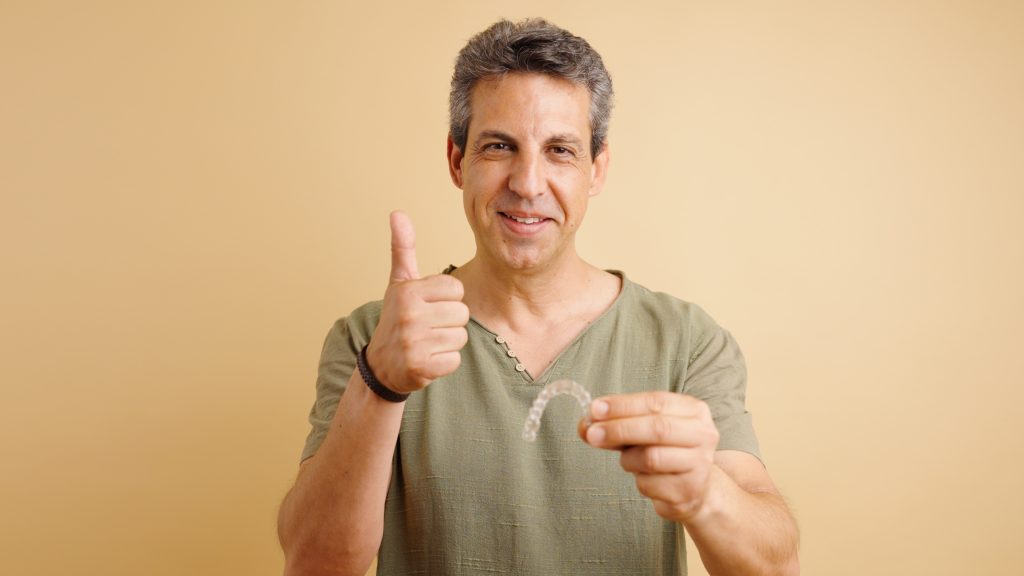
Caring for Your Aligners: Habits That Protect Your Results for Years
Caring for Your Aligners: Habits That Protect Your Results for Years
20-22 hrs
Daily aligner wear time
Twice daily
Recommended cleaning frequency
Cool water
Safe rinsing temperature
30 min
Guideline for eating and drinking
Key takeaways
1. Wear your aligners 20 to 22 hours a day for reliable tooth movement.
2. Clean aligners every morning and night with cool water and a soft toothbrush; never use hot water or abrasive pastes.
3. Brush and floss before putting aligners back in to prevent trapped plaque and gingivitis.
4. Store aligners in their protective case whenever they are out of your mouth.
5. Wear retainers after treatment to protect your results long term.
Answer First: How to Care for Your Aligners the Right Way
Caring for your aligners comes down to four consistent habits: wear them 20 to 22 hours a day, clean them every morning and night, keep your teeth clean before reinserting, and store them safely in their case. Do these well, and your treatment tends to stay on schedule, and your mouth stays healthy.
The 4 habits that protect your results
Consistent wear: keep aligners in almost all day, removing them only for oral hygiene.
Daily cleaning: rinse and gently brush both aligners twice a day.
Clean teeth first: brush and floss before you put aligners back in.
Safe storage: use the protective case, never a napkin or pocket.
Why daily care directly affects treatment success
Your aligners move teeth only while they are seated against them, so the number of hours you wear them each day has a direct effect on how quickly and predictably teeth shift. A randomized clinical trial found that wear protocol meaningfully influences the efficiency of tooth movement, which is why consistency matters more than any single trick. Cleaning and oral hygiene protect the other half of the equation: your gum and tooth health while the trays sit against your teeth for most of the day.
Wear Time: The Foundation of Aligner Success
The foundation of successful treatment is wear time. Plan on keeping your aligners in for 20 to 22 hours each day, taking them out only for brushing, flossing, and cleaning the trays. Everything else in your routine builds on this habit.
How many hours per day you should wear aligners
Aim for 20 to 22 hours daily. Within that window, teeth receive steady, gentle pressure that guides them along your planned path. Research on wear protocols shows that longer, more consistent wear supports more predictable movement, while frequent long breaks reduce that predictability clear aligner wear protocol study.
What the 30-minute rule means for eating and drinking
The 30-minute guideline is a simple way to keep your total daily wear time on target. Any short window you spend eating, drinking, or caring for your oral care should be brief so the aligners are back in place quickly. Keeping these breaks to about 30 minutes total helps you reach the 20- to 22-hour goal without tracking every minute.
How inconsistent wear slows tooth movement
When aligners are out of your mouth, your teeth do not receive the continuous pressure the plan depends on. Over a full tray sequence, small daily gaps add up and can cause an aligner to stop fitting well, delaying progress and potentially requiring refinements. Treating the 20- to 22-hour target as a firm daily minimum is the single most effective thing you can do to stay on schedule.
Daily Cleaning Routine for Clear Aligners
Clean your aligners twice a day using cool water and a soft toothbrush. A consistent routine removes the thin biofilm that builds up on the plastic, keeping the trays clear and odor-free. A systematic review of cleaning methods confirms that gentle mechanical cleaning combined with appropriate soaking helps control microbial buildup on aligner surfaces.
Step-by-step morning and night cleaning
1
Rinse right away
Rinse each aligner under cool running water to flush away saliva and loose debris as soon as you take them out.
2
Brush gently
Use a separate soft-bristled toothbrush and a small amount of clear, mild soap to lightly brush the inside and outside of each tray.
3
Soak when needed
Use a dedicated aligner or denture cleaning solution as directed to help reduce bacteria, especially if the trays look cloudy.
4
Rinse and reinsert
Rinse thoroughly again with cool water, then place clean aligners back on freshly brushed teeth.
What kills bacteria on aligners safely
The safest ways to reduce bacteria are gentle brushing with mild soap and soaking in a solution made for aligners or dentures, such as an effervescent cleaning tablet. These approaches lower microbial buildup without warping the plastic. The systematic review found that dedicated cleaning solutions and effervescent tablets were effective options for disinfecting aligners when used as directed in disinfection protocols review.
Products and methods to avoid
Use these
1. Cool or lukewarm water for rinsing
2. A soft-bristled toothbrush kept just for aligners
3. Clear, mild hand or dish soap
4. Aligner or denture cleaning tablets used as directed
5. The protective case for storage
Avoid these
1. Hot or boiling water, which can warp the trays
2. Whitening or colored toothpaste, which is abrasive and can scratch
3. Harsh bleach or scented soaps
4. Stiff scrub brushes or scouring pads
5. Leaving aligners out in the open air
Protecting Your Oral Health While in Aligners
Protect your mouth by brushing and flossing before every reinsertion and keeping up with your regular dental visits. Because aligners cover your teeth for most of the day, anything left on the enamel gets held against it, which makes clean teeth essential.
Brushing and flossing before reinserting
Always brush and floss before putting your aligners back in. Sealing plaque or food particles under the trays gives bacteria a warm, covered surface to feed on. A quick, thorough clean of your teeth first keeps that from happening and helps your aligners stay clear.
Preventing gingivitis and plaque buildup
Consistent hygiene lowers the risk of gum inflammation during treatment. A prospective observational study reported that aligner wearers may experience increased gingivitis when oral hygiene slips, and that structured oral care routines help mitigate the impact of clear aligners on gingivitis. Brushing twice a day, flossing daily, and cleaning your trays are the practical steps that keep gums calm.
Managing the oral microbiome during treatment
Wearing aligners changes the environment in your mouth, so consistent oral hygiene helps maintain a healthy balance of bacteria. Drinking plenty of plain water and cleaning both your teeth and your trays regularly are the easiest habits to keep that will balance things in your favor.
Common Aligner Care Mistakes to Avoid
The most common mistakes are keeping aligners in during meals, cleaning them with hot water or abrasive products, and storing them carelessly. Each one is easy to avoid once you know what to watch for.
Eating or drinking with aligners in
Keep only plain water in your mouth while wearing aligners. Sugary or colored drinks and food particles can get trapped against your teeth and stain or cloud the trays. Give your aligners a quick rinse when you place them back in after your brief hygiene break.
Using hot water or abrasive cleaners
Hot water is one of the fastest ways to ruin a set of aligners because heat can distort the plastic and change how the trays fit. Abrasive pastes and stiff brushes create fine scratches that trap bacteria and make aligners look dull. Stick to cool water and gentle cleaning to keep the fit and clarity intact.
Improper storage and lost aligners
Wrapping aligners in a napkin is the leading way people lose or throw them away. Whenever your aligners are out of your mouth, place them in their case. This single habit prevents most damage, loss, and accidental disposal.
Habits That Protect Your Results for Years
Protect your results long term by wearing your retainers as directed, keeping regular check-ins with your Union City dentist, and reporting any fit problems early. Treatment does not truly end when the last aligner comes out.
Wearing retainers after treatment
Teeth naturally tend to drift over time, so retainers hold your new alignment in place. Wearing them exactly as directed is what preserves the work you put in. Review articles on aligner therapy emphasize retention as a standard part of successfully finishing treatment.
Regular check-ins with your Union City dentist
Routine visits let your dentist confirm your teeth are on track with your treatment plan and catch small issues before they grow. These appointments are also the right time to ask about cleaning, retainers, and anything that feels off. Consistent check-ins keep your treatment moving smoothly.
Tracking progress and reporting fit issues
Pay attention to how each new tray seats. A well-fitting aligner should feel snug and sit fully against your teeth. If a tray feels loose, leaves a gap, or does not seem to seat properly, note it and mention it at your next visit. Early reporting helps keep your results on track.
When to Contact Your Dentist in Union City, CA
Contact your dentist if an aligner no longer fits properly or a tray is cracked, damaged, or lost. Quick action prevents small problems from delaying your treatment.
Signs your aligner isn’t fitting
Noticeable gaps between the tray and your teeth that do not close
An aligner that will not seat fully even after gentle biting pressure
Ongoing discomfort that feels different from normal snugness
A tray that suddenly feels loose or shifts around
Any of these can mean your teeth are not tracking as planned, and your dentist can advise on the next step.
Damaged or lost aligners
If an aligner cracks or goes missing, do not simply skip it. Call your dental office for guidance on whether to move to the next set or continue with a previous one until a replacement is ready. Keeping your prior set until the next one fits well gives you a safe fallback.
Dr. Bhawna Gupta DDS, a top Invisalign Sapphire Provider, provides compassionate, personalized care tailored to each patient’s needs. With expertise in Invisalign and Implants, she stays up to date on the latest technologies. After earning a fellowship in Implantology at Loma Linda University, she founded Family Dental Center, which is dedicated to delivering high-quality dental care in a comfortable environment.
Frequently asked questions
Q: What is the 30-minute rule for Invisalign?
The 30-minute guideline means the short daily breaks you take for oral hygiene should stay brief, ideally under about 30 minutes total, so your aligners remain in place for the recommended 20 to 22 hours each day and your teeth keep receiving steady pressure.
Q: What is the failure rate of Invisalign?
There is no single fixed failure rate, and outcomes depend heavily on how consistently aligners are worn. Studies show that wear protocol strongly influences the efficiency of tooth movement, so treatment stays most predictable when aligners are worn 20 to 22 hours a day, and fit issues are reported early to your dentist.
Q: What kills bacteria on Invisalign?
Gentle brushing with a soft toothbrush and mild soap, along with soaking in an aligner or denture cleaning solution such as an effervescent tablet, safely reduces bacteria. A systematic review found these dedicated cleaning solutions effective. Avoid hot water and abrasive or harsh cleaners, which can damage the trays.
Q: Do you have to wear aligners forever?
No. Active aligner treatment ends once your teeth reach their planned positions, but you will need to wear retainers as directed afterward. Retainers hold your results in place because teeth naturally tend to drift over time.
Want to schedule an appointment now? Follow our directions, use this helpful Google Maps link, or get step-by-step navigation via Get Directions.
Remember: wear your aligners 20 to 22 hours a day, clean them twice daily with cool water, and store them in their case whenever they are out.
Disclaimer: This article is for general information only and is not a substitute for personalized advice from your dentist in Union City, CA.